
Built to Last
MATERNAL STRENGTH PROVEN UNDER MIDWEST CONDITIONS
Our South Poll Cattle
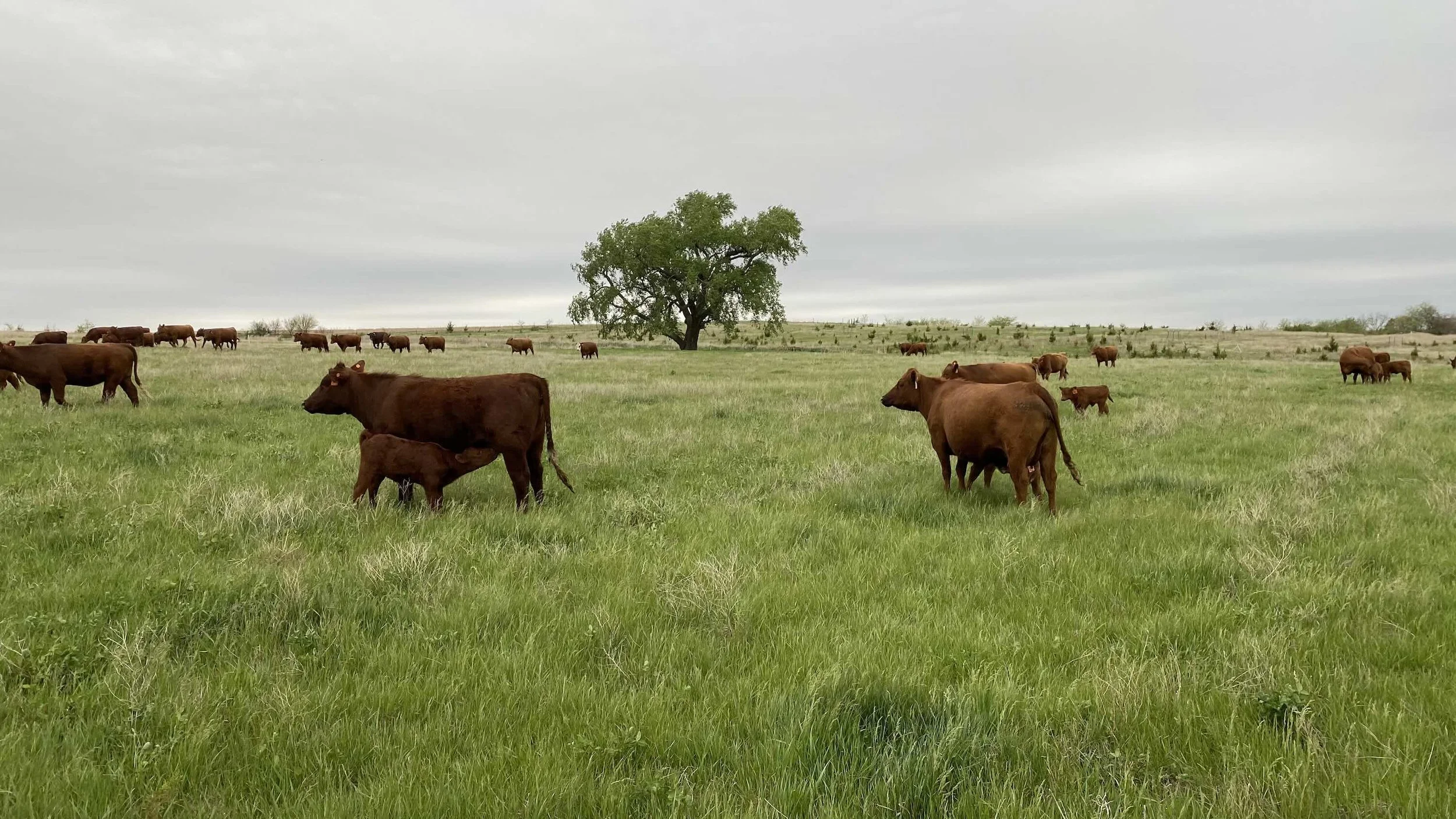
Kunert Cattle Company raises South Poll seedstock selected for maternal longevity, structural integrity, and low-input functionality in Southeast Nebraska.
Every breeding decision supports long-term fertility, moderate mature size, and practical economics. The goal is not early performance spikes. The goal is cows that remain productive long enough for their value to compound.
The Cow Type
-
Females are expected to calve annually beginning at two years of age and remain productive long-term.
Longevity is measured by consistent, problem-free production — not brief periods of peak output.
-
Moderate milk. High and tight udders. Small, functional teats.
Structural weakness and pendulous udders are not tolerated over time.
Udder quality must support a calf year after year without management compensation.
-
Mature cows are targeted to remain within a moderate frame score of 3 or less, typically maintaining mature weights between 1000–1100 pounds.
Moderation supports fertility, forage efficiency, and structural durability.
-
Uniformity of function matters more than uniformity of appearance.
Some cows are deep-bodied and easy fleshing. Others are more athletic and range-oriented. As cow families prove themselves, phenotype continues to refine naturally — without chasing extremes.
-
Cattle must be calm and workable.
A cow that will not allow her calf to be weighed and tagged shortly after birth is not a long-term prospect in the herd.


Heifer Development & Early Management

Replacement heifers remain on their dams through winter, typically nursing for approximately ten months.
This approach:
Teaches calves to graze corn residue
Supports rumen development
Reduces reliance on heavy supplementation
Unless weather dictates otherwise, cows maintain body condition while raising calves through winter, followed by approximately 60 days of recovery prior to calving.
Bull calves selected for development are weaned around 7–8 months and managed separately with the bull herd.
Development emphasizes forage, durability, and structural integrity — not accelerated growth.
Foundation Cow Families
The herd is built around established cow families retained for consistent functional strengths rather than visual uniformity.
Families remain in the program because they consistently demonstrate:
Fertility under environmental pressure
Structural soundness
Udder quality
Adaptability to forage variation
Cow families are not preserved out of sentiment.
They remain only as long as their daughters continue to perform.
Only proven families remain.
CULLING STANDARDS
Selection pressure is consistent and intentional.
Immediate removal:
• Open at fall pregnancy check
• Failure to raise and wean a calf
• Poor disposition
Flagged and monitored:
• Structural weaknesses
• Susceptibility to pinkeye or fly issues
• Hard calving tendencies
Longevity is not assumed — it is proven through annual production.
Cows remain only as long as they contribute positively to the herd.
HERD BULL PHILOSOPHY
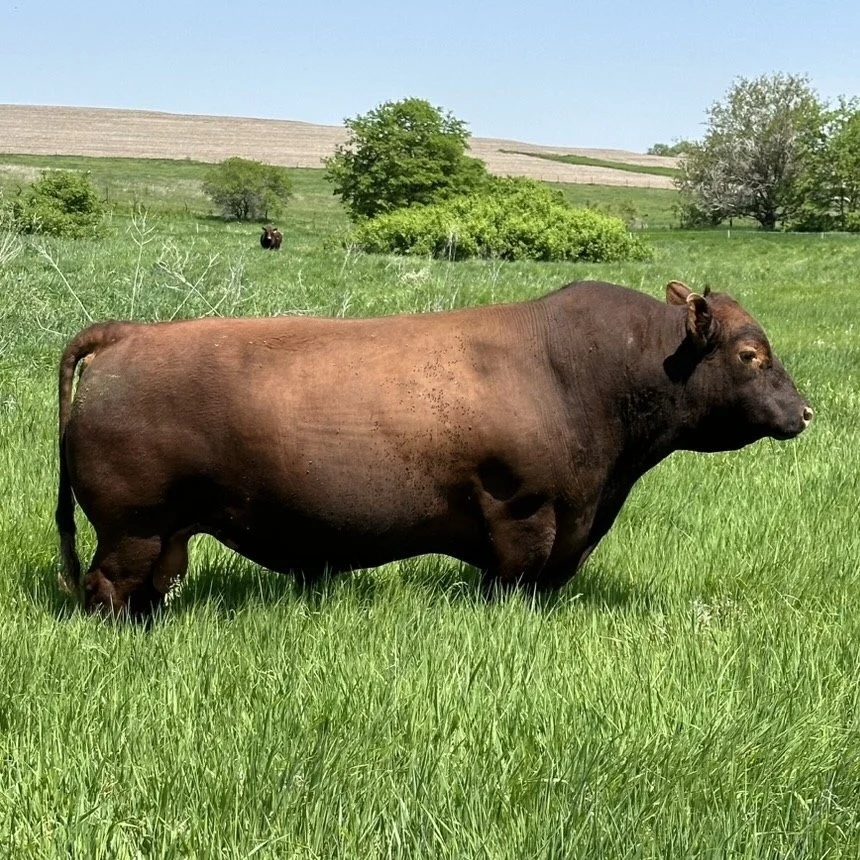
Bulls are selected based on maternal proof — not early performance alone.
A prospective herd bull must come from a cow with a demonstrated record of consistent annual production. Maternal and grandmaternal performance carry significant weight.
Bulls are developed entirely on pasture.
The strongest bulls are those backed by proven cows within the program. Retaining sons from those females allows maternal strength to compound under local conditions.
Outside herd sires are introduced carefully and selected on the strength of their dams and granddams.
Learn more about the ranch and the principles guiding selection: